Guide
Risk assessments and CDM 2015
Where the risk assessment duty comes from, who carries it out and how it differs from RAMS.

Free Word template
A practical, editable Word template for documenting how work will be carried out safely, including scope, pre-start requirements, resources, the sequence of work, controls and briefing.
Editable .docx, 11 pages, No sign-up required
Method statements vs risk assessments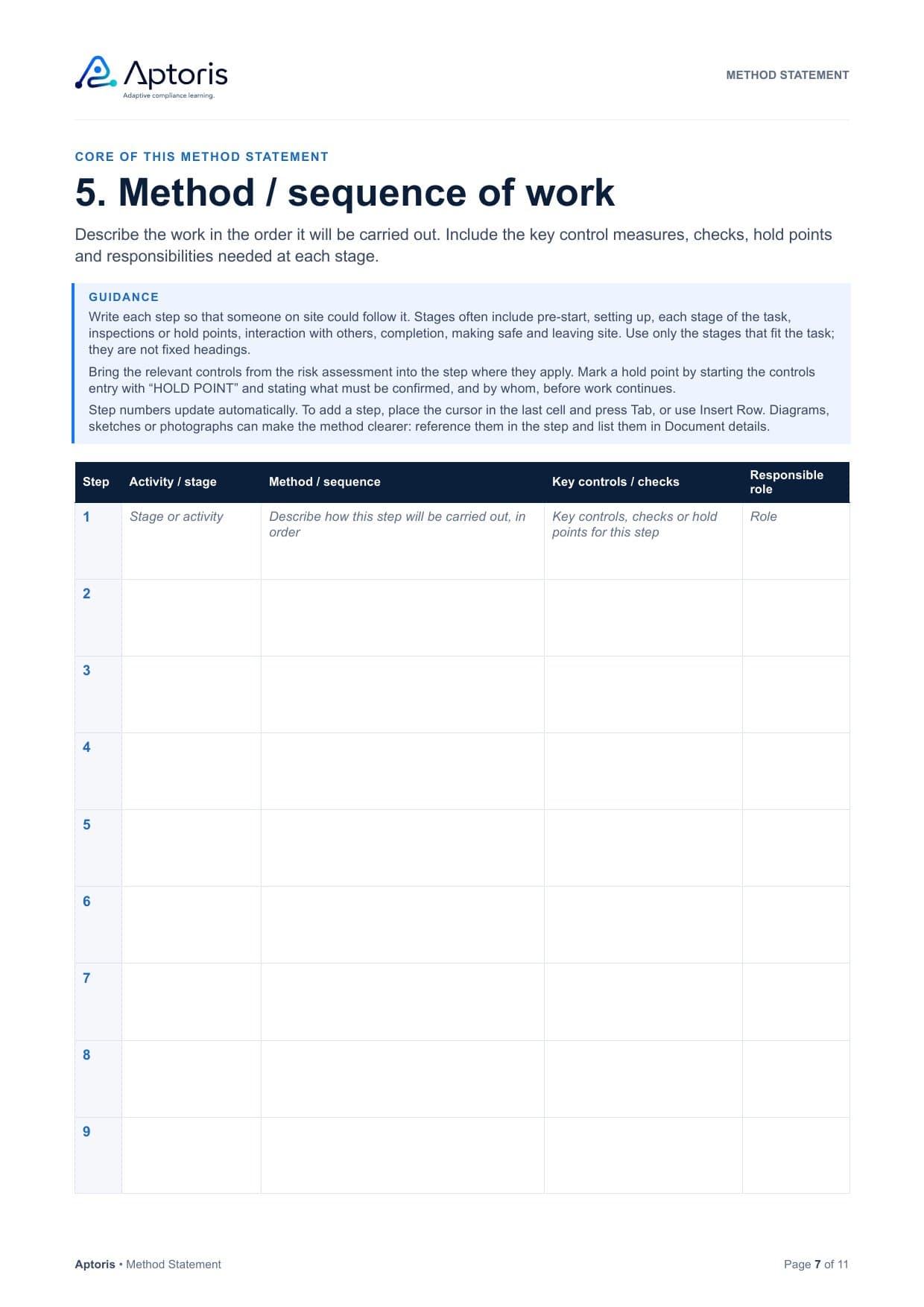
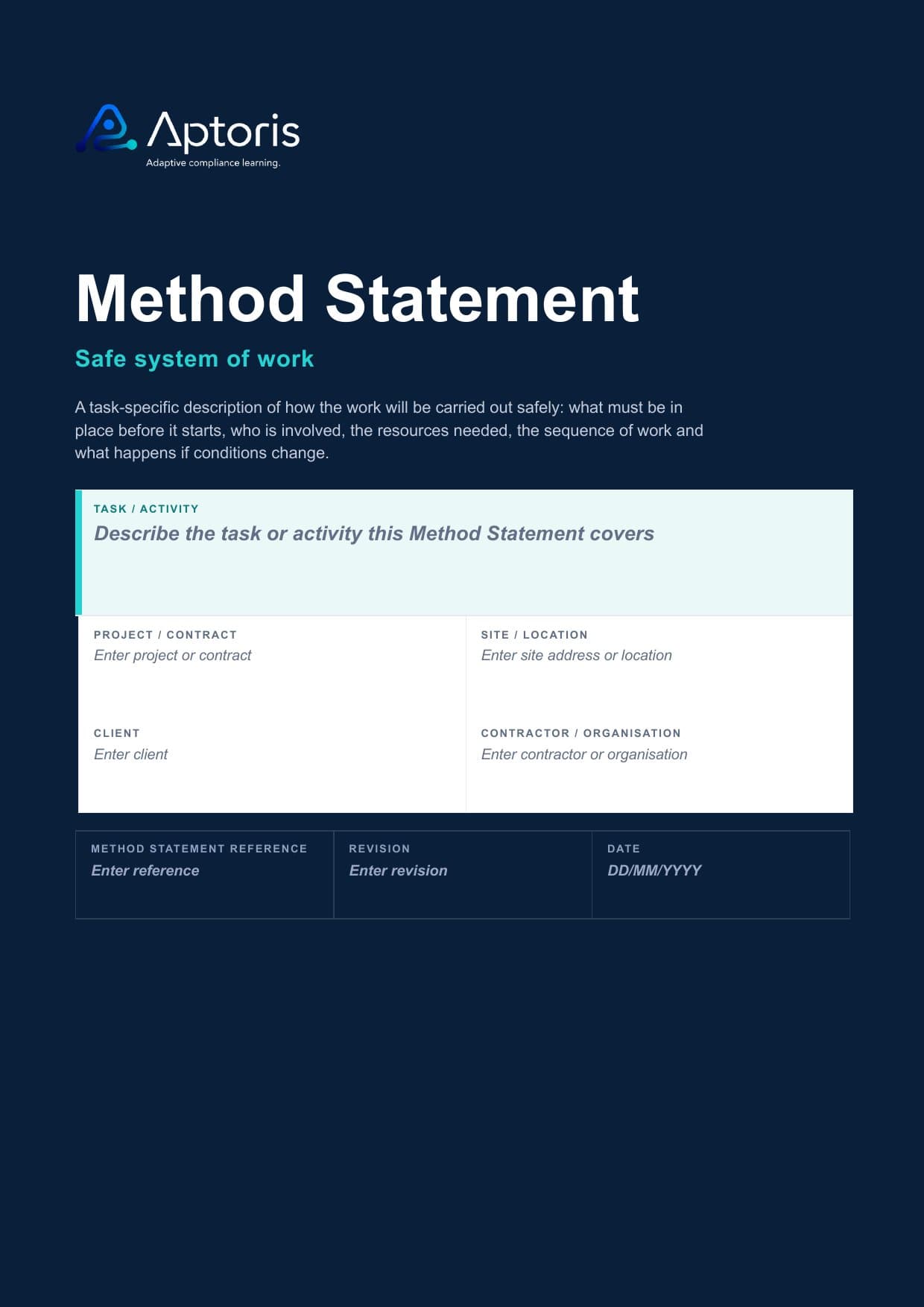
A task-specific safe system of work, built around the sequence of the work itself.
These are real pages from the Word template. Blue guidance boxes explain each section and can be deleted before issue, and the tables are ready to fill in.
On this page
Method / sequence of work
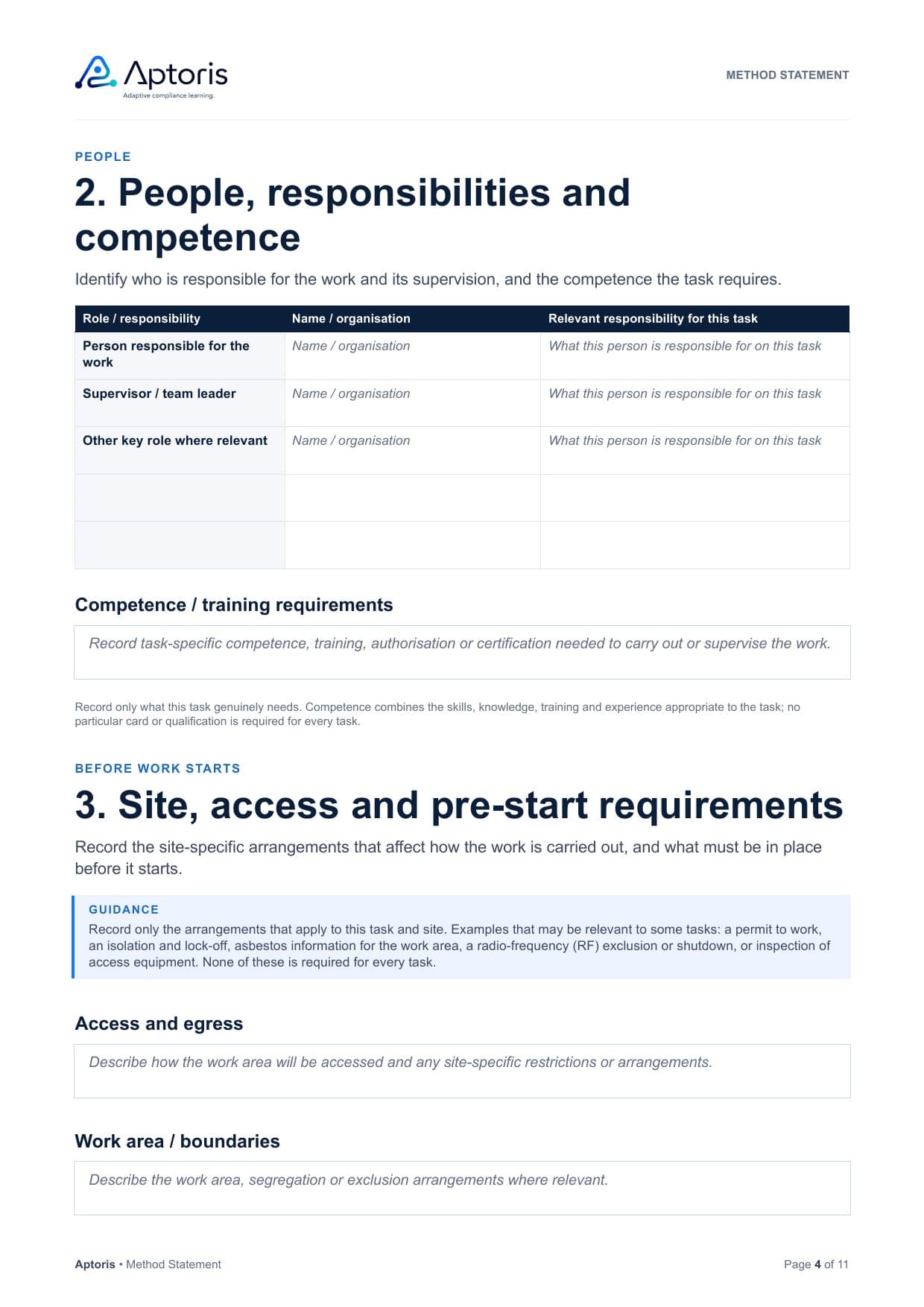
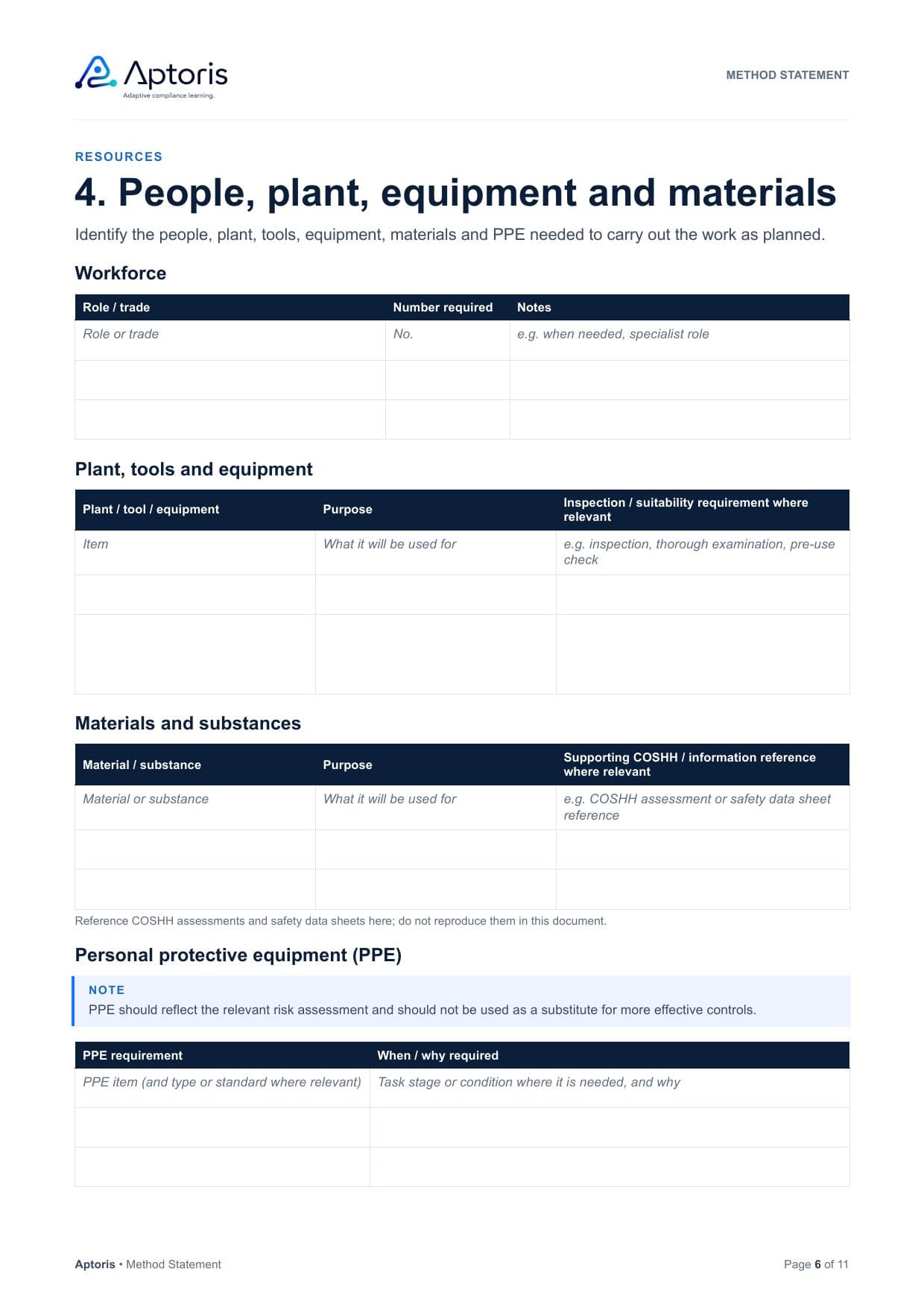
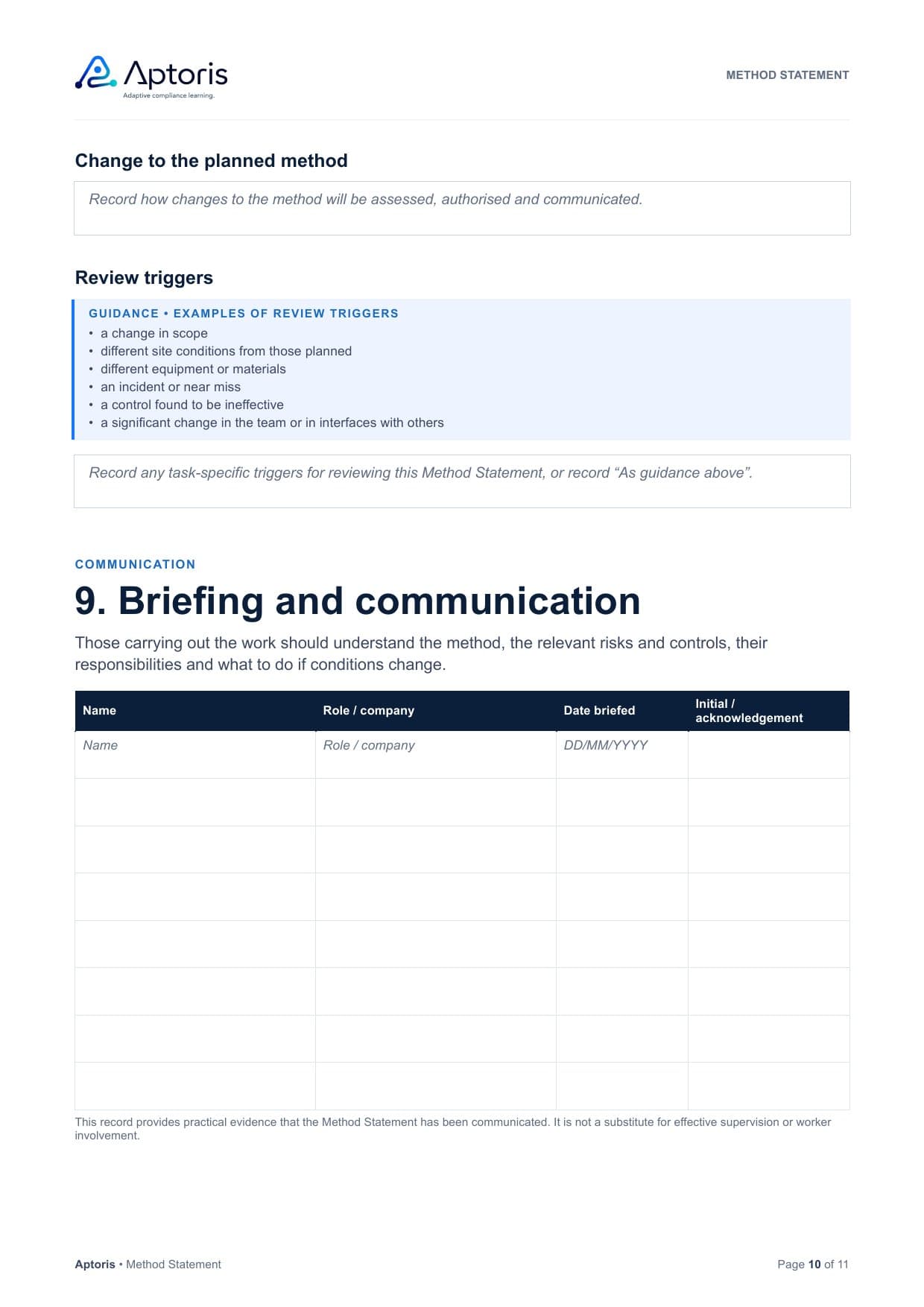
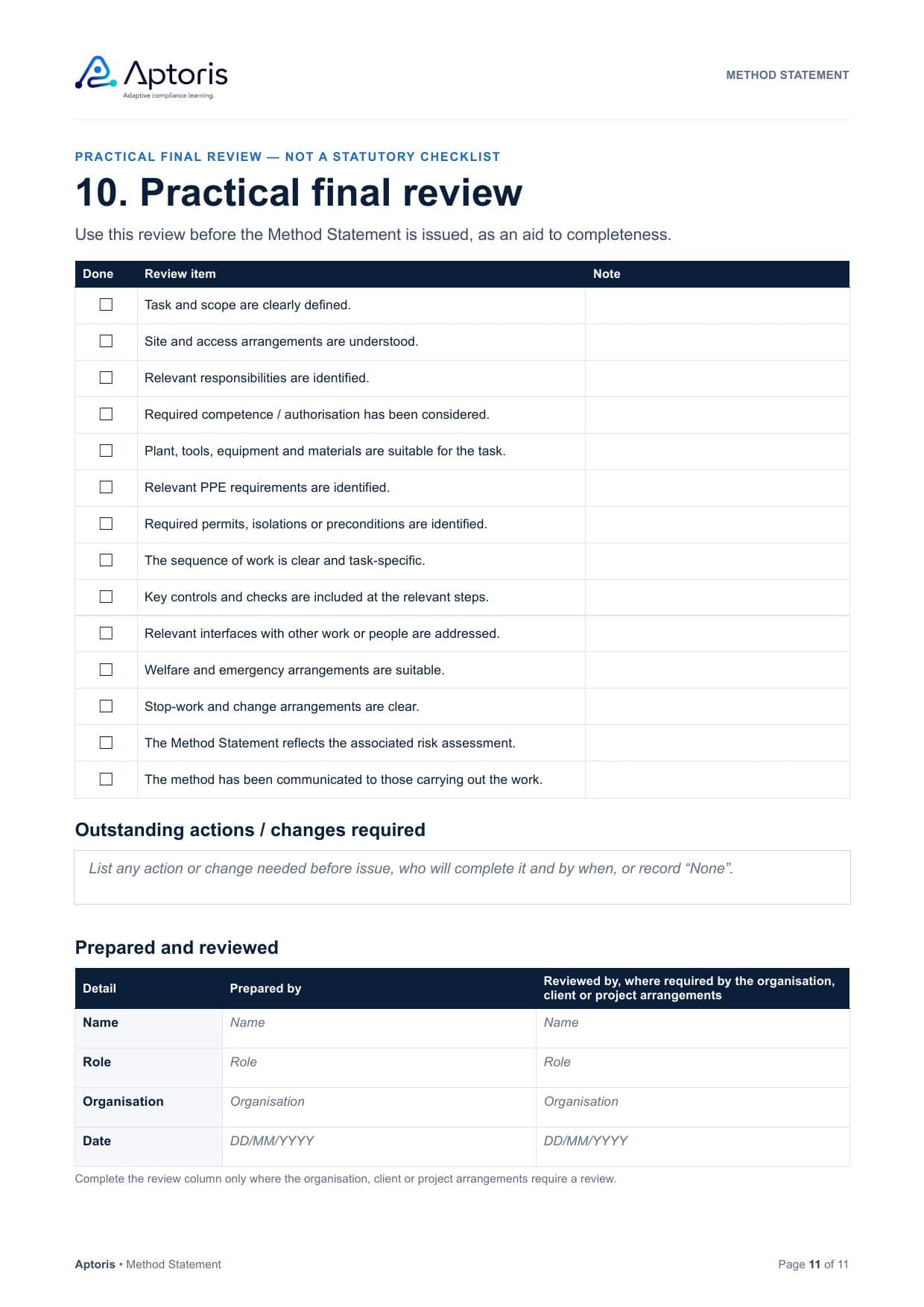
Swipe to see more pages.
Ten numbered sections, with a cover, document control and a short note on using the template.
Section 5 of the template
The core of the template is an expandable step-by-step work sequence. For each stage, you can record what will happen, how it will be carried out, the key controls or checks and who is responsible.
The sequence table’s columns
Numbered automatically as rows are added.
The stage of the task, such as setting up, a task stage or making safe.
How the step will be carried out, in order.
The controls, checks and hold points that apply at that step.
Who carries out or confirms the step.
Relevant controls from the risk assessment can be brought into the step where they apply instead of repeating an entire risk assessment inside the Method Statement.
Identifies hazards, who may be harmed and the controls needed to manage the risk.
Explains how the work will actually be carried out safely, in a logical sequence, using the relevant controls.
They are often used together, but they are not the same document.
Anyone planning, preparing or communicating a safe system of work for a specific task can use it.
Set out how your own work will be carried out safely.
Give contractors on a project a consistent structure to work from.
Brief the team on the method and what to do if conditions change.
Plan the sequence, resources and interfaces for a task.
Help teams write clear, task-specific methods.
Describe specialist work in a form others on site can follow.
The template is particularly useful for organisations planning higher-risk, complex, unusual or non-routine activities, where a clear, task-specific method matters most.
State exactly what work the Method Statement covers, where it will happen and the limits of the activity.
Identify the people, competence, access arrangements, permits, isolations, equipment and other pre-start requirements that genuinely apply.
Describe the task step by step, bringing the relevant controls and checks into the stage where they apply.
Communicate the method to those carrying out the work and review it if the task, conditions or controls materially change.
A useful Method Statement should describe the actual activity rather than becoming a list of generic hazards or company procedures.
Examples, not rules. What belongs in a Method Statement depends on the task, the site and the risks.
Yes. It is free to download, with no sign-up and no email address needed. Select Download the Word template and the file downloads straight away.
A Microsoft Word document (.docx) of 11 A4 pages, with no macros. It contains a cover, document control and ten numbered sections, from task and scope to a practical final review.
Yes. Each prompt sits in a Word content control: click it and type to replace it. Dates use date pickers and the final review uses tick boxes. You can add rows to the tables, and the sequence of work renumbers its steps automatically. Other software that opens .docx files should work, although formatting may vary.
A document that describes, in a logical sequence, how a particular task will be carried out safely. It draws on the controls identified by the risk assessment and is used to communicate the safe system of work to the people doing the job.
There is no general legal requirement for a document specifically called a Method Statement, and CDM 2015 does not prescribe one. Method Statements are widely used as a practical way to set out a safe system of work, particularly for higher-risk, complex or unusual work, as HSE’s HSG150 (opens in a new tab) explains. The underlying legal duties to assess and manage health and safety risks still apply.
What the task is and where it takes place, who is involved and the competence needed, what must be in place before work starts, the resources required, the sequence of work with its controls and checks, welfare and emergency arrangements, what happens if conditions change, and how the method is communicated. Keep it proportionate to the task.
A risk assessment identifies the hazards, who may be harmed and the controls needed. A Method Statement explains how the work will be carried out safely, in sequence, using those controls. They are often used together, but they are different documents. See Method Statements and RAMS explained and risk assessments and RAMS.
No. RAMS usually means a risk assessment and method statement presented together. This template is a standalone Method Statement: it records the associated risk assessment reference rather than including a risk assessment. Need both documents together? Download the combined RAMS template.
Someone with sufficient understanding of the task, its risks and controls, and the work arrangements on site, often the contractor carrying out or supervising the work. They should draw on relevant input where needed, such as from the people doing the work, specialists and others whose work interfaces with the task.
When something changes that could affect health and safety: the scope, the site conditions, the sequence, the equipment or materials, the people, or the controls. Review it too after an incident or near miss, or if a control proves ineffective. The template’s change, stop-work and review section records these triggers.
Guidance and templates for the work around the method statement.
Where the risk assessment duty comes from, who carries it out and how it differs from RAMS.
How the Principal Contractor plans, manages and coordinates the construction phase.
What a site induction should cover, and how it differs from task briefings.
What the plan covers, and how it differs from risk assessments and method statements.
An editable Word template for the plan that manages health and safety during the construction phase.
Download the editable Word template and adapt it to the task, site and work conditions.
Editable .docx, 11 pages, No sign-up required